Many UPSC aspirants spend years preparing for the Civil Services Examination. But once they clear the exam, a common question arises: does IAS officer get salary during training?
If you’re planning to become an IAS officer, understanding what happens after selection is important. After all, you’ve invested time, effort, and often financial resources into your preparation. Knowing whether you’ll receive a salary during training can help you plan your future better.
The short answer is yes. IAS officers receive a salary during their training period. However, there are several details that most aspirants don’t know. The actual amount, deductions, allowances, and facilities provided during training may surprise you.
Let’s break it down step by step.
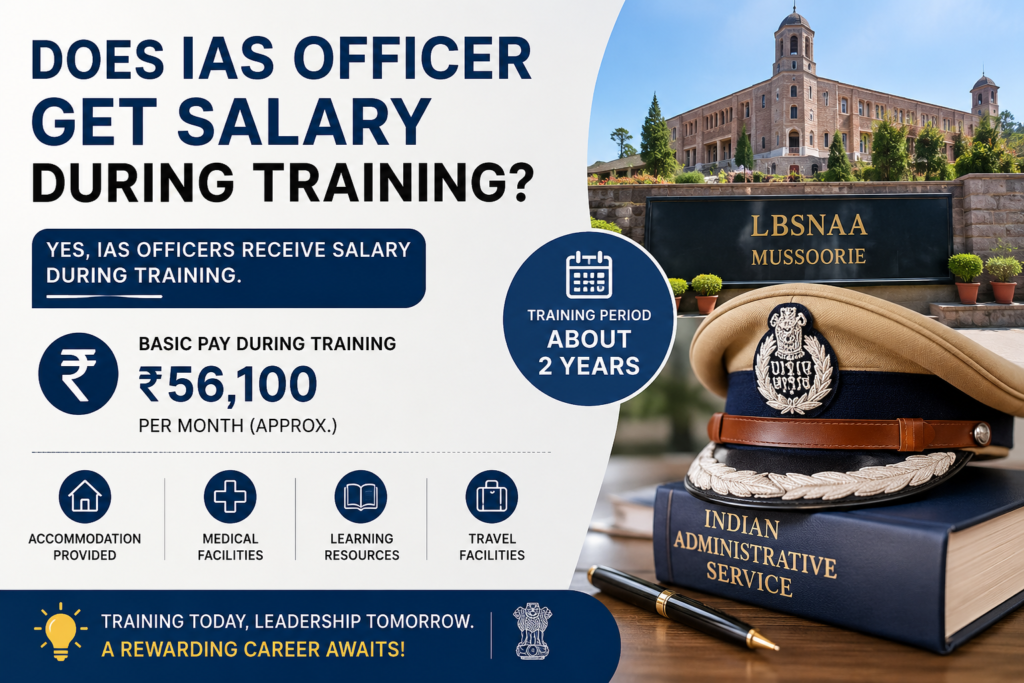
Yes, IAS officers receive a salary during their training at the prestigious Lal Bahadur Shastri National Academy of Administration in Mussoorie.
Once a candidate is selected through the UPSC Civil Services Examination and allotted to the Indian Administrative Service (IAS), they become officer trainees. During this period, they are paid according to the government pay structure.
The salary is not a stipend. It is a regular government salary paid to probationary officers.
IAS officers receive approximately ₹56,100 basic pay per month during training, along with certain allowances and government-provided facilities.
Before discussing salary in detail, it’s helpful to understand the training process.
Selected IAS officers undergo training at:
The training usually lasts around two years, including foundation courses, professional training phases, and field attachments.
During this entire period, officers remain government employees on probation.
The salary structure during training is based on the 7th Pay Commission.
| Component | Amount |
|---|---|
| Basic Pay | ₹56,100 per month |
This is the starting pay for IAS officers under Pay Level 10.
Apart from basic pay, trainees may receive:
However, some deductions may apply for accommodation, mess charges, and other academy facilities.
As a result, the amount credited to the bank account may differ from the gross salary.

Many aspirants assume training is similar to a college course. It isn’t.
Once selected, an IAS officer becomes part of the government service.
The government pays officers because:
Think about it this way: a doctor in residency receives payment while training. Similarly, IAS officers are compensated while learning administrative responsibilities.
One reason many people overestimate the take-home salary is because several expenses are already covered.
Common facilities include:
Officer trainees are usually provided residential facilities within the academy campus.
Libraries, research centers, lecture halls, and digital resources are available.
LBSNAA offers:
Government-approved medical facilities are available during training.
These benefits reduce personal expenses significantly.
Many aspirants are actually curious about what happens after probation.
Once training is completed and officers are posted to their cadre states, salary progression begins.
| Position | Approximate Basic Pay |
| IAS Probationer | ₹56,100 |
| Sub-Divisional Magistrate (SDM) | ₹56,100+ |
| District Magistrate (DM) | ₹78,800+ |
| Divisional Commissioner | ₹1,44,200+ |
| Chief Secretary | ₹2,25,000 |
| Cabinet Secretary | ₹2,50,000 |
The actual salary varies due to allowances and government revisions.
Many candidates believe they will not receive any income during training. This is incorrect.
Selected IAS officers receive regular government pay.
Salary is important, but it should not be the primary reason for pursuing the IAS.
The role carries significant responsibility, public service obligations, and administrative challenges.
Some aspirants hear the basic pay figure and assume they will receive the same amount in hand.
Various deductions can affect take-home salary.
Salary figures shared online are often exaggerated.
Always verify information from official government sources.
Don’t focus solely on training salary. Learn about promotions, responsibilities, and long-term career growth.
Even though you’ll receive a salary during training, maintaining financial discipline is important.
Many aspirants spend excessive time researching benefits before qualifying.
Your first goal should be securing a rank.
Understanding cadre allocation, probation rules, and career progression can help you make informed decisions.
Yes. IAS officers receive a government salary during their training period as probationary officers.
The basic pay is approximately ₹56,100 per month under Pay Level 10.
IAS training is paid. Officer trainees receive a salary while undergoing training.
Yes. Accommodation facilities are generally provided at the training academy.
The basic pay remains the same, but allowances and deductions may differ from officers serving in field postings.
The complete training process generally extends over nearly two years, including academy training and field assignments.
So, does IAS officer get salary during training? The answer is a clear yes.
IAS officers receive a regular government salary while undergoing training at LBSNAA and during their probation period. Along with the basic pay of ₹56,100 per month, they also enjoy several facilities such as accommodation, medical support, and learning resources.
The most important takeaway is this: while salary is reassuring, the real reward of becoming an IAS officer lies in the opportunity to serve society and contribute to governance at the highest levels.
If you’re preparing for UPSC today, focus first on clearing the examination. The salary and benefits will follow naturally once you earn your place.
What motivated you to consider the IAS—job security, public service, leadership, or something else? Share your thoughts and continue exploring the realities of the civil services journey.
© 2025 Created & Maintained by PM IAS ACADEMY – Unit of Plover Minds Institute LLP