Have you ever wondered who manages some of the most important government decisions in West Bengal?
From district administration to policy implementation, IAS officers play a major role in shaping public services. Yet many UPSC aspirants, students, and curious citizens often ask the same question: how many IAS officer in West Bengal?
The answer is not as straightforward as it seems. There is an approved cadre strength, a working strength, and vacancies that change over time. Understanding these numbers can help you better understand the state’s administrative system and the opportunities available for future civil servants.
Let’s break it down in a simple way.
The West Bengal IAS Cadre is one of the largest state cadres in India.
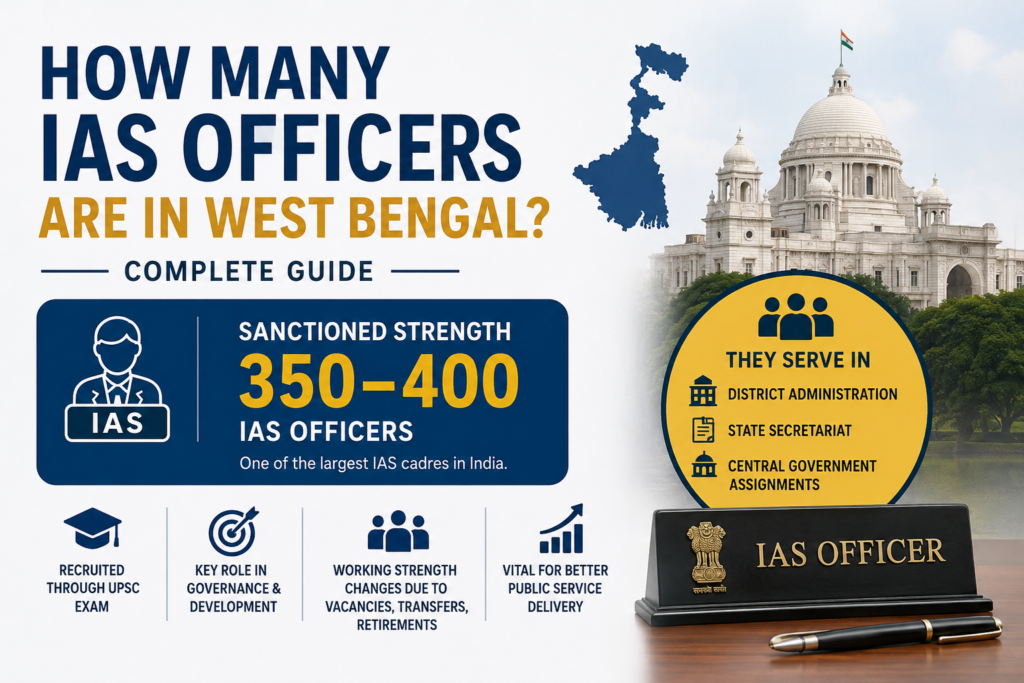
According to official cadre allocation data, the sanctioned strength of IAS officers in West Bengal is generally around 350–400 officers, though the exact number may vary based on periodic revisions by the Government of India.
These officers are divided into different categories:
The actual number of officers serving in the state at any given time may be lower due to:
West Bengal typically has a sanctioned IAS cadre strength of approximately 350–400 officers, making it one of India’s larger state cadres.
The IAS cadre refers to the pool of IAS officers allocated to a specific state.
When candidates clear the UPSC Civil Services Examination, they are allotted a cadre based on various factors such as:
Officers assigned to the West Bengal cadre spend most of their careers serving within the state administration.
This cadre system ensures continuity and local administrative expertise.
You might think the number is just another statistic.
But it has a direct impact on governance.
A sufficient number of IAS officers helps ensure:
When vacancies remain unfilled for long periods, administrative workloads increase significantly.

IAS officers work in various capacities throughout their careers.
Many officers begin as:
They oversee law and order, development programs, and public welfare initiatives.
Experienced officers often work in departments such as:
Here, they help formulate and implement policies.
Some officers are deputed to the Government of India and work on national-level projects.
The primary route is through the UPSC Civil Services Examination.
The process includes:
A small number of officers may also enter the IAS through promotion from the State Civil Services.
This system ensures both fresh talent and experienced administrators become part of the cadre.
Many UPSC aspirants compare cadres before giving their preferences.
Some of the larger IAS cadres include:
West Bengal is often considered attractive because it offers:
This makes it a sought-after cadre among many candidates.
Many people confuse sanctioned strength with actual working strength.
Vacancies are common across many state cadres.
Cadre strength can be revised periodically.
Always verify numbers through official government notifications.
Some officers serve at the central level for years.
They remain part of the cadre but may not be physically posted in the state.
Many aspirants spend too much time worrying about cadre allocation.
Your UPSC rank remains the biggest factor.
Understanding West Bengal’s economy, culture, and governance challenges can help during interviews and future service.
Cadre-related information changes occasionally.
Always refer to official notifications rather than social media rumors.
Your cadre will influence your career for decades.
Research thoroughly before finalizing preferences.
The sanctioned cadre strength is generally around 350–400 officers. The working strength may vary due to vacancies, retirements, and deputations.
Many officers consider it a desirable cadre because of its administrative diversity and governance opportunities.
Yes. Officers may serve temporarily through central deputation, inter-cadre arrangements, or specific government assignments.
The Government of India periodically reviews and revises cadre strength based on administrative needs.
Most are recruited through UPSC Civil Services Examination, while a smaller percentage are promoted from State Civil Services.
So, how many IAS officer in West Bengal?
The state generally has a sanctioned IAS cadre strength of around 350–400 officers, making it one of the larger IAS cadres in India. However, the actual number serving at any moment can vary because of vacancies, retirements, promotions, and deputations.
If you’re preparing for UPSC, understanding cadre structures can help you make informed decisions about your future career. But remember—your first goal should always be securing a strong rank.
What interests you most about the West Bengal cadre: its administrative opportunities, career growth, or cultural diversity?
Share your thoughts and continue exploring the fascinating world of the Indian Administrative Service.
© 2025 Created & Maintained by PM IAS ACADEMY – Unit of Plover Minds Institute LLP