You probably know IAS officers run the country.
But do you know what they get in return?
Most UPSC aspirants spend 3 to 5 years preparing for the exam. They memorize dates, policies, and ancient history. But almost nobody stops to ask: what does life actually look like on the other side?
Here’s the truth. The facilities provided to IAS officers go far beyond a fat salary. We’re talking about perks that cover your home, your car, your health, your travel, your security, and even your phone bills.
If you’re preparing for UPSC — or you’re just curious about what IAS officers actually enjoy — this article will show you the full picture. No fluff, just facts.
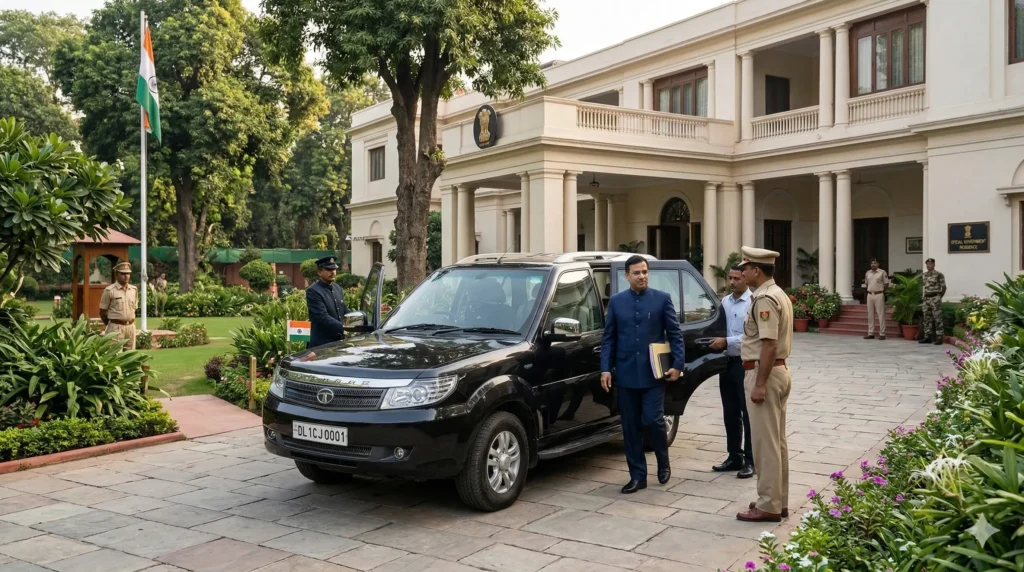
Most people choose IAS for power, prestige, or patriotism. Fair enough.
But facilities matter too — and not just because of comfort. They matter because the government wants IAS officers focused on running the country, not worrying about rent or hospital bills.
These perks are not bribes. They’re tools. And understanding them helps you understand what the role actually demands.
So here are the 15 key facilities an IAS officer gets. Read every one.

This is the one most people know about. But the details surprise them.
IAS officers get a government-provided residence at every posting. These aren’t cramped apartments. In district postings, you’re talking about a spacious bungalow with a garden, multiple rooms, and support staff quarters attached.
In metros like Delhi, officers get Type VI or Type VII government accommodations — among the most prime real estate in the country.
You pay no rent. You pay no maintenance from your pocket. The government handles it.
And when you move to your next posting, a new government house is waiting.
Getting to meetings, tours, and inspections is part of the job. And the government makes sure you never have to hail a cab.
Every IAS officer is assigned an official vehicle. The type depends on seniority — but even junior IAS officers typically get a well-maintained government car with a full-time driver.
Senior officers and those in key positions get more premium vehicles. The driver is government-employed and paid by the state.
Your personal commute costs are effectively zero.
A cook. A peon. An orderly. Sometimes a gardener.
IAS officers are entitled to domestic staff provided and paid by the government. The number of staff depends on the officer’s rank and posting.
For a District Magistrate running hundreds of miles of territory, this isn’t luxury — it’s operational necessity. But it’s still a facility most Indians never experience.
Think about it: while most professionals pay 30–40% of their salary on rent and daily expenses, an IAS officer’s biggest costs are handled before the month even starts.
This one matters more than people realize.
IAS officers get comprehensive health coverage under the Central Government Health Scheme (CGHS). This covers the officer, their spouse, and dependent children.
Treatment at government hospitals is free. Reimbursements apply to empanelled private hospitals.
Medicines, diagnostics, specialist consultations — all covered.
And unlike most private health insurance, CGHS doesn’t cap you at a package limit and walk away.
Not every IAS officer gets a security detail. But many do.
Officers posted in sensitive districts, conflict zones, or handling high-stakes portfolios are provided security personnel. In some states and postings, this is standard.
The security cover is assigned based on threat assessment and the nature of your work.
For officers handling law and order, land acquisition, or electoral duties — this isn’t optional. It’s essential.
Inspection tours, district reviews, inter-state meetings, central government training — IAS officers travel a lot.
All official travel is reimbursed. This includes train fares (typically First AC), air tickets (for eligible grades), hotel accommodation, and daily allowances.
The Daily Allowance (DA) is calculated based on the city of visit and the officer’s grade pay. For senior officers at major metros, this adds up.
None of this comes from the officer’s salary.
Here’s the facility most aspirants never hear about.
IAS officers can apply for study leave to pursue higher education — including abroad. This is available for full-time academic courses at recognized institutions.
The officer continues to receive their basic pay during this period. The government doesn’t just freeze your career — in many cases, it funds your growth.
Some IAS officers have completed Masters degrees from Oxford, Harvard, and LSE using this provision.
Think about that the next time someone tells you government jobs don’t invest in you.
Every IAS officer is entitled to Leave Travel Concession.
This means the government pays for your travel (and your family’s travel) to your home state — or anywhere in India once every 4 years under the All India LTC provision.
Eligible travel costs are fully reimbursed. Accommodation is sometimes covered too.
For an officer posted far from home, this is a significant benefit.
Official communication is covered.
IAS officers receive telephone and mobile allowances for official use. In many postings, a dedicated landline at the official residence is government-funded. Mobile reimbursements are tied to actual official use.
Senior officers often have dedicated government communication systems in their offices and residences.
Your workplace is not your problem.
IAS officers have fully staffed offices — personal assistants, stenographers, section officers, peons. The staff strength depends on your posting.
A District Magistrate has dozens of staff across departments. A Joint Secretary in Delhi has a dedicated team.
You walk in and focus on decisions. The administrative machinery around you handles the rest.
This isn’t just about comfort. It’s about access.
IAS officers are accorded official protocol at all government functions. When you enter a meeting as a District Collector, the room acknowledges it.
Reservation quotas in government hospitals, rest houses, and public institutions apply. Priority in bookings, access to government circuit houses, and formal recognition at state functions — these are real, everyday conveniences.
The perks don’t stop when you retire.
IAS officers are covered under the National Pension System (NPS). On top of that, retired IAS officers retain access to CGHS for life.
Former officers above certain ranks retain some protocol benefits. Many are appointed to tribunals, commissions, and regulatory boards after retirement.
Your career in government doesn’t just end at 60.
Throughout their career, IAS officers attend training programs — and the government pays for all of it.
This includes foundational courses at LBSNAA in Mussoorie, in-service training every few years, and specialized programs at premier institutions.
International training is increasingly common. Officers are sent to institutions in the US, UK, Japan, and Singapore on government-funded programs.
You’re not just doing a job. You’re continuously developing — on the government’s budget.
If you want to build your own house, the government helps with that too.
IAS officers are eligible for House Building Advance (HBA) — a subsidized loan from the government. The interest rates are below market rates, and repayment terms are favorable.
This is separate from your government housing. It’s for building or buying personal property.
This last one isn’t a financial perk. But it matters.
Senior IAS officers, especially those with strong service records, have some say in their postings. Through the Annual Confidential Report system and departmental preferences, career progression can be shaped.
You’re not entirely powerless over where you end up.
This isn’t just about comfort. It’s about access.
IAS officers are accorded official protocol at all government functions. When you enter a meeting as a District Collector, the room acknowledges it.
Reservation quotas in government hospitals, rest houses, and public institutions apply. Priority in bookings, access to government circuit houses, and formal recognition at state functions — these are real, everyday conveniences.
The perks don’t stop when you retire.
IAS officers are covered under the National Pension System (NPS). On top of that, retired IAS officers retain access to CGHS for life.
Former officers above certain ranks retain some protocol benefits. Many are appointed to tribunals, commissions, and regulatory boards after retirement.
Your career in government doesn’t just end at 60.
Throughout their career, IAS officers attend training programs — and the government pays for all of it.
This includes foundational courses at LBSNAA in Mussoorie, in-service training every few years, and specialized programs at premier institutions.
International training is increasingly common. Officers are sent to institutions in the US, UK, Japan, and Singapore on government-funded programs.
You’re not just doing a job. You’re continuously developing — on the government’s budget.
If you want to build your own house, the government helps with that too.
IAS officers are eligible for House Building Advance (HBA) — a subsidized loan from the government. The interest rates are below market rates, and repayment terms are favorable.
This is separate from your government housing. It’s for building or buying personal property.
This last one isn’t a financial perk. But it matters.
Senior IAS officers, especially those with strong service records, have some say in their postings. Through the Annual Confidential Report system and departmental preferences, career progression can be shaped.
You’re not entirely powerless over where you end up.
That’s the wrong question.
The real question is: are you ready for what it demands?
Because these facilities are provided for a reason. An IAS officer is expected to be available at 2 AM when a flood hits. To make decisions that affect millions. To hold the line in situations most people can’t even imagine.
The perks aren’t rewards. They’re support systems.
But if you’re serious about the civil services — and you understand what this life actually looks like — then yes. The facilities provided to IAS officers are comprehensive, long-term, and genuinely life-changing.
Start your preparation with clarity. Know what you’re working toward — not just the exam, but the career, the responsibility, and yes, the facilities too.
Yes. At every posting, a government-provided residence is assigned. Officers do not pay rent. The type and size of accommodation depends on seniority and posting location.
Yes. CGHS coverage extends to the officer’s spouse and dependent children. After retirement, the officer retains CGHS access for life.
The official vehicle is meant for official duties. However, in practice — especially in district postings — the line between official and personal use is more relaxed. Rules on this vary by state cadre.
No. Security is assigned based on threat perception and posting sensitivity. Officers in conflict-prone districts or handling contentious portfolios are more likely to have security personnel.
Retirement benefits include NPS pension, lifetime CGHS coverage, and in many cases, post-retirement appointments to tribunals, commissions, or government boards.
© 2025 Created & Maintained by PM IAS ACADEMY – Unit of Plover Minds Institute LLP